Landing in Beijing, and getting around.
From Exit B at Terminal 3 to your hotel, with prices. Then the handful of things that make a huge city easy to move around in.
Two airports. Check which one.
Beijing has two international airports, and they're more than 80 kilometres apart. Capital Airport (PEK) is the older one and closer to the city; by official 2025 figures about three quarters of Beijing's international flights land there, almost all at Terminal 3. Daxing (PKX) opened in 2019, about 50 kilometres south of downtown. Each has its own express rail line into the subway. A taxi between the two takes over an hour, so don't mix them up on the way home either.
Terminal 3, from Exit B
Every international passenger at Terminal 3 comes out at Exit B on the second floor, the arrivals level. Most of what you need is on this floor. Below you, the first floor is buses and two post offices, and B1 is taxis. Above, the third floor is airline offices and the fourth is departures.
| At Exit B | Where |
|---|---|
| China Unicom SIM counter (red) | Right of the exit |
| China Mobile SIM counter (blue) and Payment Service counter | Across from the exit |
| ATM | Behind the Payment Service counter |
| Lawson convenience store | Out of Exit B, on your right. Good place to test Alipay and WeChat and break a large note. |
| Restrooms (sit-down toilets) | Out of Exit B, on your right |
| Free hot water machine | Arrivals level, near the exit. Bring your own bottle or use the paper cups. |
| Luggage storage | Arrivals level, keep walking along the hall |
| Currency exchange | B1, follow the signs |
Four ways into the city
| Option | Price | Time | How |
|---|---|---|---|
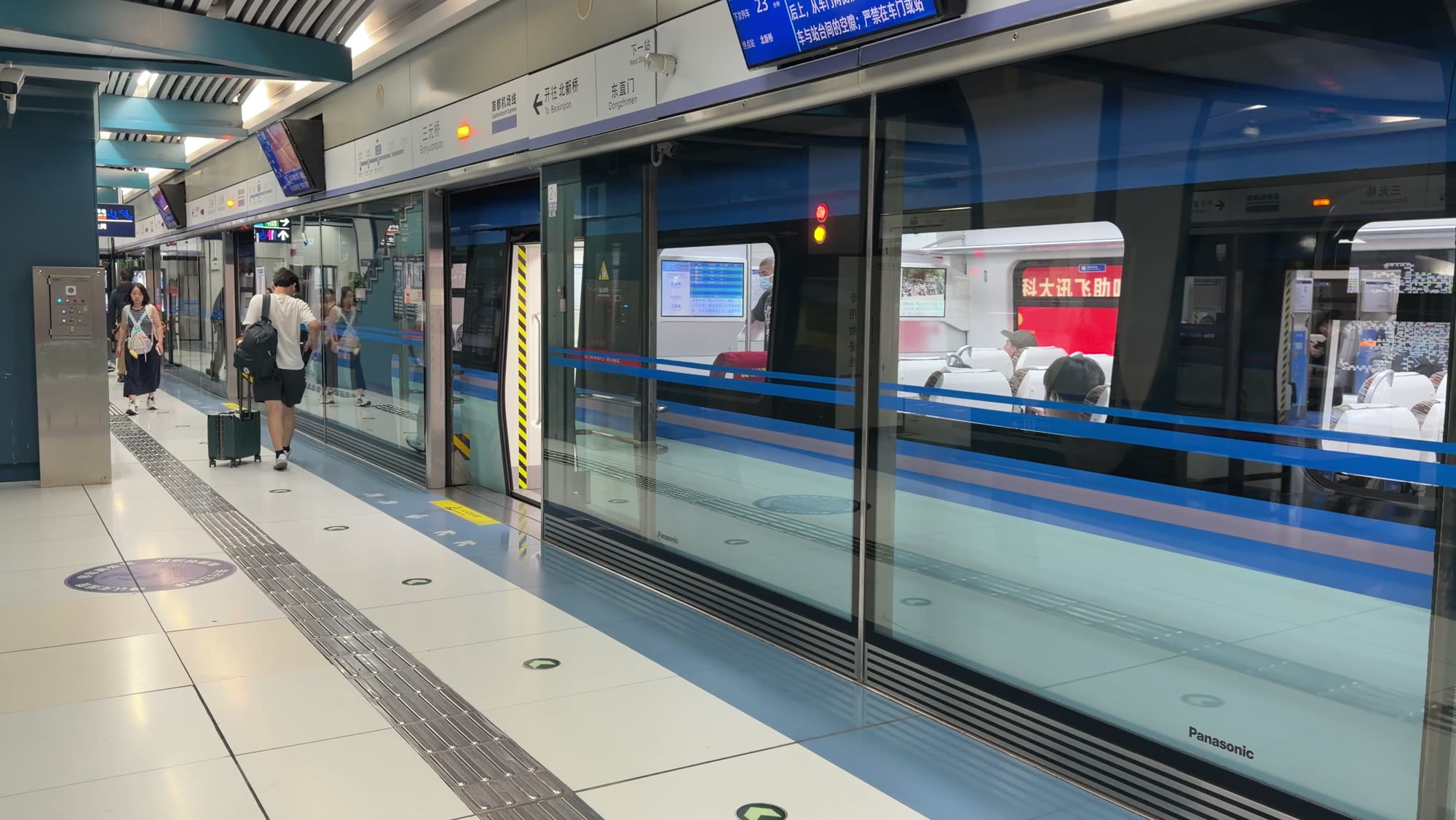
| Airport Express (the most popular) | ¥25 per person, about $3.50 | About 20 minutes to the city | From Exit B follow the ride-hailing corridor, don't take the escalator down, look right. Tap an international bank card at the gate, same card when you get off. The first stop after Terminal 3 is Terminal 2; that's the normal route. City stops: Sanyuanqiao, Dongzhimen, Beixinqiao, all subway transfers. |
| Taxi | Board at the rank: Tiananmen about ¥100, Wangfujing or Guomao about ¥90, Universal Resort about ¥110, Badaling Great Wall about ¥280 | Often over an hour in rush hour | Elevator from Exit B down to B1, through the door to the queue. Staff tell you which car. Ignore anyone offering a car inside the terminal; the rank has a sign with a complaints number for a reason. |
| Ride-hailing (DiDi) | Depends on car type; check the app | Same as taxi | Official pickup is on B2, west and east zones, a long walk with three floors of escalators. The local trick: take the elevator up to the 4th floor departures level, walk out of a gate such as Gate 10, and ask the driver to pick you up there. Drivers can only wait 8 minutes, so call the car once you're already upstairs. |
| Bus | By route; children under 6 free, 6 to 14 half price | Depends on route | Escalator next to China Mobile down to the first floor. Intercity buses first, local routes at the far end. Direct buses to the railway stations, the Great Wall, Universal Resort and Daxing Airport. Buy at the counter or a machine, wait nearby, staff call the bus. |
My rule of thumb: solo or with friends and not much luggage, take the Airport Express. Family or a lot of bags, take a taxi straight to the hotel. Beijing traffic is bad at rush hour, and the train doesn't sit in it.
If you need to rest first
There are three hourly hotels inside Terminal 3: Ji Hotel and Airport Station Lounge at the two ends of the arrivals level, and a capsule hotel on B1 across from Starbucks. All three are on Trip.com. Links and notes.
Getting around the city
- The subway is the easiest way to get around. It reaches almost every sight and shopping area, fares start around ¥3, about 40 cents, and signs and announcements are in English. Since 2025 you can tap a Visa, Mastercard, UnionPay, JCB or Amex card straight at the gate. No paper ticket, no app.
- Line 8 is Beijing's underground central axis. It runs north to south under the old city and connects Yongdingmen, Qianmen, the Temple of Heaven, Wangfujing, the Drum Tower, Shichahai, Nanluoguxiang and the Olympic Park. Tiananmen and the Forbidden City are on Line 1, which crosses it in the middle of the city. This is why I pick hotels by the subway map.
- Avoid rush hour if you can: weekdays roughly 7 to 9 in the morning and 5 to 7 in the evening. With luggage, go outside those hours.
- Every subway and train station has a security check. The thing that catches most travellers is aerosol cans, sunscreen spray and hairspray. They may also ask you to take a sip of your own drink.
- Taxis: book with DiDi (inside Alipay) or Amap. Don't get into unmarked cars that wave you over. Whenever the subway works for the trip, I'd take the subway.
- Shared bikes for short hops. They're on every street, you unlock them with Alipay, and riding past the small shops and side streets is one of the nicest ways to feel part of the city rather than passing through.
- Buses are good but mostly in Chinese. If you want to try, look up the exact route and stop on Amap first.
- High-speed rail: Beijing has several stations far apart, Beijing, Beijing West, Beijing South, Beijing North, Chaoyang and Qinghe. Check the station on your ticket, give yourself extra time, and carry your original passport to board.
- Screenshot your destination in Chinese so you can show it to people. If you're lost, ask someone younger; many speak some English, and people here are happy to help.
Terminal 3 details checked on foot on 1 September 2026. Subway and rail facts as of June 2026. Fares and layouts change; the taxi board at the rank always shows current estimates.